MARINE ROCKS
-


Marco Rocks Coralline
5.0 / 5.0
(2) 2 total reviews
Regular price From $4.29Regular priceUnit price / perSale price From $4.29 -


Marco Rocks
5.0 / 5.0
(4) 4 total reviews
Regular price From $3.75Regular priceUnit price / perSale price From $3.75 -
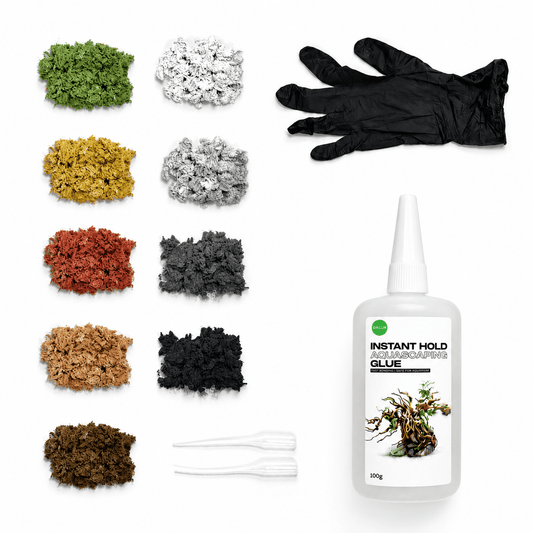
Instant Hold Aquascaping Glue
5.0 / 5.0
(7) 7 total reviews
Regular price From $9.95Regular priceUnit price / perSale price From $9.95 -

Instant Hold Moss and Frag Glue
Regular price $9.95Regular priceUnit price / perSale price $9.95 -


Genuine Fiji Pukani Rocks
4.8 / 5.0
(6) 6 total reviews
Regular price From $71.90Regular priceUnit price / per$89.87Sale price From $71.90Sale -

Marco Rocks Aquascaping Powder
Regular price $15.35Regular priceUnit price / perSale price $15.35 -

Marco Rocks Coralline Colorant
Regular price $19.95Regular priceUnit price / perSale price $19.95 -


WIO - Colored Aquascaping Glue
Regular price $24.95Regular priceUnit price / perSale price $24.95
MARINE ROCKS FAQs
What is the best rock for a reef tank?
Clean, porous dry rock is the best starting point for most reef tanks, because it gives beneficial bacteria plenty of surface area without bringing in pests. Marco Rocks are mined in Florida, washed and 100% free of pests and nuisance algae. Genuine Fiji Pukani Rocks are extremely porous, giving them outstanding biological filtration capacity for demanding reef systems.
Should I use dry rock or live rock?
Dry rock is the safer choice for most new reef tanks, because it carries no pests, aiptasia or nuisance algae. The trade-off is that it starts without bacteria, so the tank needs to cycle before you add livestock. Over the following months coralline algae and beneficial organisms colonize the rock, and it becomes live rock on its own.
Which Marco Rocks style should I choose?
Marco Rocks come in three styles. Foundation rock forms the base and main structure, Shelf Rock creates flat ledges and overhangs for placing corals, and Basic Reef Saver is the budget option for filling out the base. Each style is also available as Marco Rocks Coralline, and Nano Shelf Rock comes in a 3.5 kg bag for small tanks.
How much rock do I need for my reef tank?
A common starting point is about 0.5 to 1 lb of dry rock per gallon of display volume, depending on how open you want the aquascape. Very porous rock like Fiji Pukani is lighter for its size, so it goes further per pound. Leave open sand areas and swimming space; more rock is not always better for flow.

How do I glue or cement reef rock together?
Use E-Marco Cement, available in gray or coralline color, to build strong joints for arches, pillars and larger structures, and follow its curing directions before the rock goes into water. For quick bonds, many reefers combine Marco Rocks Aquascaping Powder with Instant Hold Aquascaping Glue. Marco Rocks Coralline Colorant helps cement joints blend into the rock.
Does dry rock leach phosphate?
Some can, at first. Because Fiji Pukani comes from an ancient marine reef environment, it may release small amounts of naturally bound phosphate during the first few months underwater. This is normal and settles down with regular water changes and phosphate control. Mined Marco Rocks are washed and ready to use.
How much does reef rock cost?
Marco Rocks are $3.75 per lb for Basic Reef Saver, $4.85 per lb for Foundation and $6.85 per lb for Shelf Rock, with Marco Rocks Coralline from $4.29 to $7.99 per lb. Genuine Fiji Pukani Rocks are $71.90 for a 10 lb mix or $287.68 for a 40 lb box. E-Marco Cement is $32.99 per 2.2 kg bucket, Marco Rocks Aquascaping Powder is $15.35 and Bahama Aragonite Sand is $55 per 10 kg bag.